
When Borders Blend The Creative Alchemy of Global Fusion Cuisine
How Chefs Around the World Are Redefining Tradition Through Imagination
The Birth of a Culinary Dialogue
Fusion cuisine is not a modern invention, although it feels new to our contemporary palate. Its roots reach back to the earliest encounters between civilizations, when merchants, travelers, and explorers carried ingredients across continents. The arrival of chili peppers from the Americas in Asia, the spread of tomatoes into the Mediterranean, and the introduction of spices from India into Europe all marked the beginnings of culinary fusion. Each encounter transformed local dishes, creating new flavors that reflected both curiosity and adaptation.
In the modern world, fusion has evolved from accident to art. Chefs intentionally blend traditions, not out of necessity but out of creativity. They treat ingredients as a global language, combining Japanese precision with Mexican vibrancy or pairing French technique with Thai spice. This dialogue between cultures has made the modern kitchen a crossroads of imagination. What began as simple adaptation has now become a deliberate act of storytelling, where each dish speaks in multiple accents at once.
The Philosophy Behind Fusion
True fusion is more than a mix of ingredients, it is a thoughtful harmony between traditions. A successful fusion dish respects its origins while daring to explore new possibilities. It requires understanding not only flavor but the meaning behind each cultural element. When a chef combines Italian pasta with Indian curry sauce, it is not a random experiment, it is a conversation between two histories of comfort food. Each culture contributes a part of its identity to the result.
This philosophy extends beyond taste. Fusion also represents inclusivity and collaboration, showing how diversity can create beauty. The act of blending two culinary traditions symbolizes the breaking of boundaries, both geographical and emotional. It tells us that food, like art or music, thrives on exchange. In a world often divided, fusion cuisine reminds us that difference is not a barrier but a bridge. The table becomes a space where harmony is not abstract, but edible.
Signature Styles of Global Fusion
Different regions have embraced fusion in their own ways, creating styles that mirror their cultural intersections. In California, chefs pioneered the combination of Asian and Western ingredients, leading to the famous California roll and avocado sushi. In Peru, Japanese immigrants merged their techniques with local produce, giving birth to Nikkei cuisine, a blend that features citrusy ceviche with soy-marinated fish. Across Europe, Mediterranean flavors have been reimagined with African and Middle Eastern spices, creating entirely new interpretations of classic dishes.
In the cities of Southeast Asia, street vendors experiment daily with hybrid recipes, mixing French baguettes with Vietnamese fillings, or pairing Chinese noodles with Indian spices. The result is not chaos but evolution. Each innovation becomes a reflection of migration, trade, and cultural coexistence. These regional fusions are no longer novelties, they are traditions in their own right, evolving through generations who see the world not as divided but shared.
Fusion at the Fine Dining Table
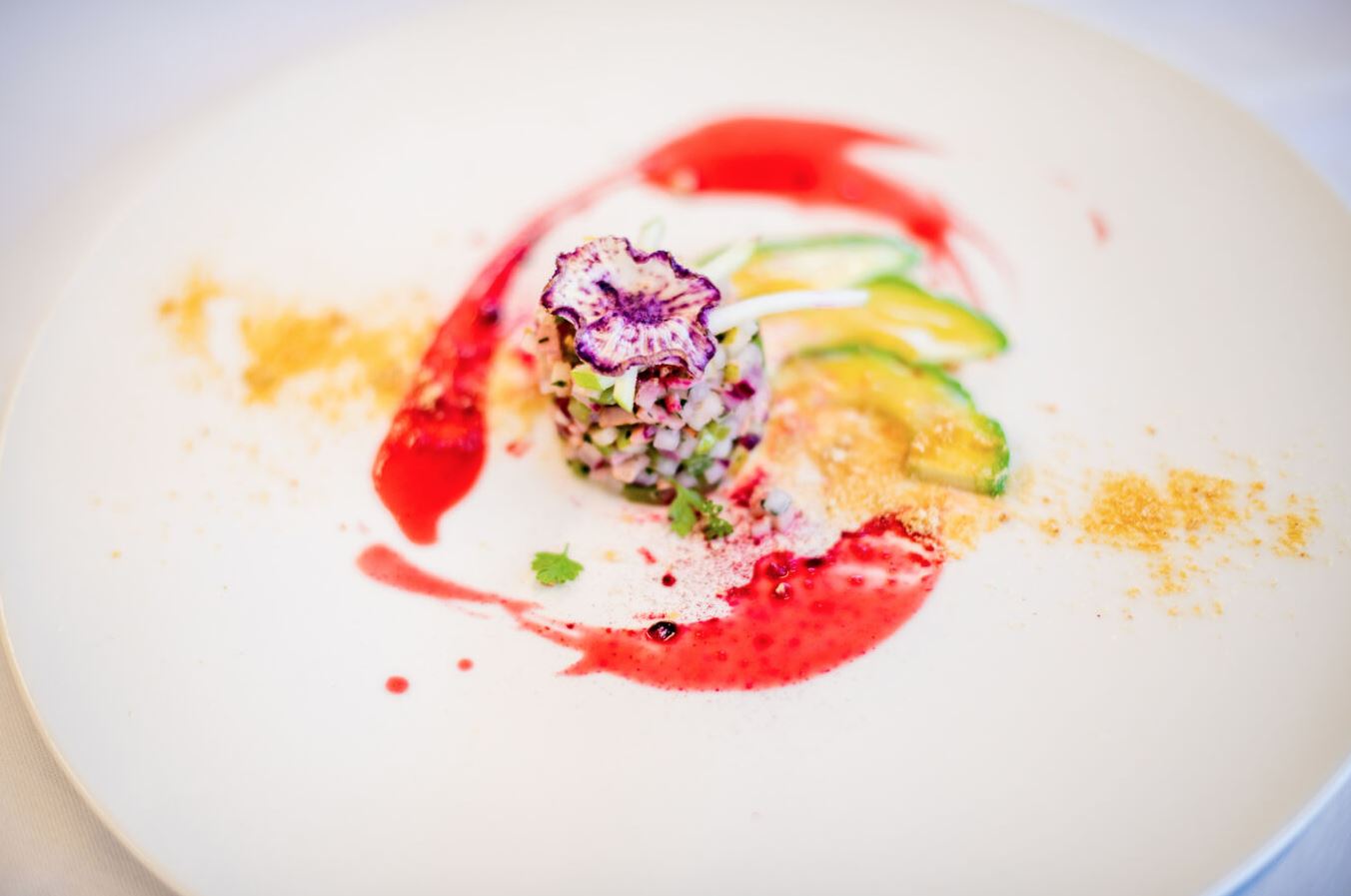
In haute cuisine, fusion has become an art form that pushes the boundaries of creativity. Elite restaurants experiment with contrasts, serving wasabi ice cream beside seared beef, or using coconut foam to elevate a European pastry. Here, the focus is not only on combining flavors but also on creating sensory experiences that challenge perception. Chefs act as scientists and artists simultaneously, using molecular techniques to merge ingredients that would otherwise never meet.
Yet fine dining fusion is not simply about spectacle. Its deeper purpose lies in storytelling. A tasting menu might take a diner on a journey from the spice markets of Marrakech to the coastal kitchens of Tokyo within a single meal. Every course becomes a chapter, every aroma a memory of distant lands. Through this approach, fine dining reconnects global narratives, proving that gastronomy can be a form of cultural literature written on the plate.
The Role of Street Food in Fusion Evolution
While luxury restaurants gain attention, the streets often lead the way in innovation. Street vendors are spontaneous creators, driven by availability, necessity, and demand. They have an instinctive ability to merge ingredients that might never appear together in traditional settings. In Manila, vendors fill tortillas with adobo. In Mexico City, ramen stalls serve bowls spiced with local chilies. In Istanbul, one can find kebabs layered with kimchi or falafel wrapped in naan bread.
These grassroots experiments prove that fusion is not confined to elite kitchens. It thrives wherever people eat with curiosity. Street food fusion tells the story of modern life, where migration and travel blend traditions naturally. It represents survival, adaptability, and creativity born from community. Each bite connects cultures not through luxury but through shared hunger and shared joy.
Balancing Authenticity and Innovation
One of the greatest challenges in fusion cooking is maintaining authenticity. Critics often argue that blending cuisines risks losing the integrity of the original traditions. However, innovation does not necessarily mean erasure. The essence of fusion lies in respect, in studying the soul of each cuisine before attempting to combine them. A balanced fusion dish pays homage to its roots even as it ventures into new territory.
For instance, a chef creating sushi tacos must understand both the precision of Japanese preparation and the boldness of Mexican flavor. The key is not to dominate one tradition with another but to let them coexist in harmony. When done with care, fusion becomes a celebration of authenticity rather than its rival. It preserves heritage while making it accessible to new audiences, ensuring that food remains both timeless and alive.
Technology and the Future of Fusion
Modern technology has accelerated the evolution of fusion cuisine. Social media connects chefs from every corner of the world, allowing ideas to travel faster than ever before. Ingredient mapping software predicts compatible flavor compounds, helping chefs experiment with combinations guided by chemistry. Artificial intelligence can even design entirely new recipes, merging the culinary logic of multiple cultures into something unprecedented.
At the same time, global supply chains and sustainable farming have expanded access to exotic ingredients. A chef in Sweden can now source Thai lemongrass and Peruvian quinoa with ease, making experimentation part of everyday cooking. Technology does not replace creativity, but it enhances the reach and precision of fusion. It allows chefs to dream bigger, to bring the world onto a single plate without compromising environmental responsibility or cultural respect.
Fusion as a Cultural Reflection
Fusion food mirrors the social and emotional state of humanity itself. It reflects our migrations, our curiosity, and our interconnectedness. The rise of fusion cuisine coincides with a generation that travels more, communicates more, and values shared experiences. Every fusion dish is a metaphor for coexistence. It reminds us that beauty often arises from contrast, that harmony is achieved not through uniformity but through balance.
Moreover, fusion cooking reveals the adaptability of tradition. Rather than static monuments, culinary heritages become living organisms, capable of transformation. As societies evolve, so do their tastes, and fusion provides the language to express that evolution. Through the lens of food, we witness the ever-changing identity of culture, proving that heritage is not lost when it changes, but reaffirmed when it survives through adaptation.
The World on a Single Plate
At its heart, fusion cuisine is an act of unity. It transforms borders into meeting points and differences into dialogue. Whether created by a Michelin-starred chef or a street vendor with a small cart, fusion food captures the spirit of a world that refuses to remain divided. It is both the memory of tradition and the promise of invention. Each dish tells the story of discovery, of flavors meeting and merging across time and geography. To taste fusion is to taste humanity itself, endlessly inventive, endlessly curious, and forever hungry for connection.